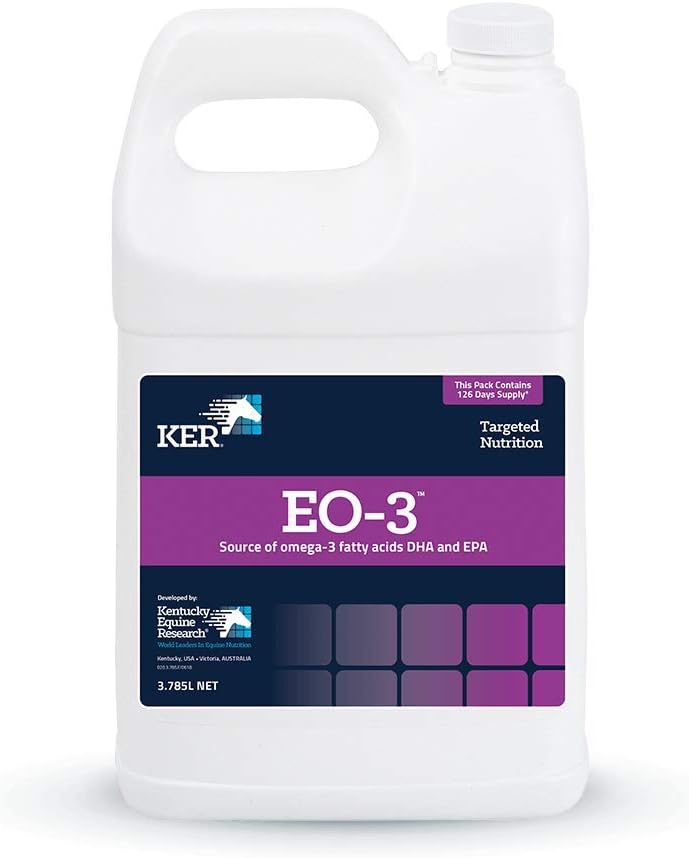


Kentucky Equine Ricerca EO-3: Fonte di acidi grassi Omega-3 DHA e EPA per cavalli, 1 Gal (128 Serve)
- Gli acidi grassi Omega-3 dell'olio di pesce hanno effetti positivi sulla tolleranza al glucosio, sulla flessibilità del globulo rosso e sulle numerose condizioni infiammatorie nei cavalli
- Prestazioni riproduttive per stalloni di allevamento, e broodmare incinte e lattanti
- Gli acidi grassi a catena lunga marina DHA ed EPA sono più efficacemente utilizzati come precursori degli ormoni locali rispetto alle fonti vegetali di acidi grassi omega-3
What Is EO-3™?
EO-3™ is a rich source of the long-chain omega-3 fatty acids DHA and EPA in a palatable liquid form for horses. EO-3™ can be fed to all classes of horses, including foals, breeding stock, and performance horses to improve the critical ratio of omega-3 to omega-6 in the diet.
The equine athlete that is provided EO-3™ can benefit from the difference in inflammatory response. In addition, marine-derived omega-3s have also demonstrated benefits to the cardiovascular system, reproductive performance, and bone development in numerous research studies in several species.
Why Should I Use Marie-Derived Omega-3s for My Horse?
Improves glucose tolerance
Strengthens immune function
Increases red blood cell flexibility for respiratory health and performance
Enhances bone metabolism and development
Benefits of DHA- and EPA-mediated inflammatory response include reduction in joint inflammation, allergic reactivity, exercise-induced bronchoconstriction, and exercise-induced pulmonary hemorrhage
Reproductive benefits include improved fertility, improved colostrum quality, enhanced passive transfer of antibodies to foals, and increased sperm concentration, motility, and viability
Marine-derived long-chain fatty acids DHA and EPA are more efficiently used as precursors of local hormones than plant-based sources of omega-3 fatty acids such as flax or chia
Feeding Directions:
Add 1 to 2 oz (30 to 60 mL) to the feed of growing horses, broodmares, and performance horses in light to moderate work daily. Horses in heavy work, breeding stallions, and those recovering from an illness or injury may be fed 2 to 4 oz (60 to 120 mL) per day. Start with an introductory dose of 1/2 oz (15 mL) or less and gradually increase over a period of 7-10 days.
Informazioni importanti
Indicazioni
Aggiungere da 1 a 2 oz (30 a 60 mL) al mangime di cavalli in crescita, broodmares, e cavalli di performance in leggero a lavoro moderato ogni giorno. Cavalli in lavori pesanti, stalloni di allevamento, e quelli che recuperano da una malattia o lesioni possono essere alimentati da 2 a 4 oz (60 a 120 mL) al giorno. Iniziare con una dose introduttiva di 1/2 oz (15 mL) o meno e gradualmente aumentare durante un periodo di 7-10 giorni.
Dimensioni del prodotto
7,5 x 4 x 12 pollici; 4 once
Specifiche
| Data di scadenza | Nov 2027 |
| Articolo Peso | 4 Ounces |
| Articolo | 1 galloni |
| Sapore | Pesce |
| Oggetto | Li'. |
| Tipo di prodotto | Integratore alimentare animale |
| Marca | Kentucky Equine Ricerca |
| Tag | |
|---|---|
| Tag | |