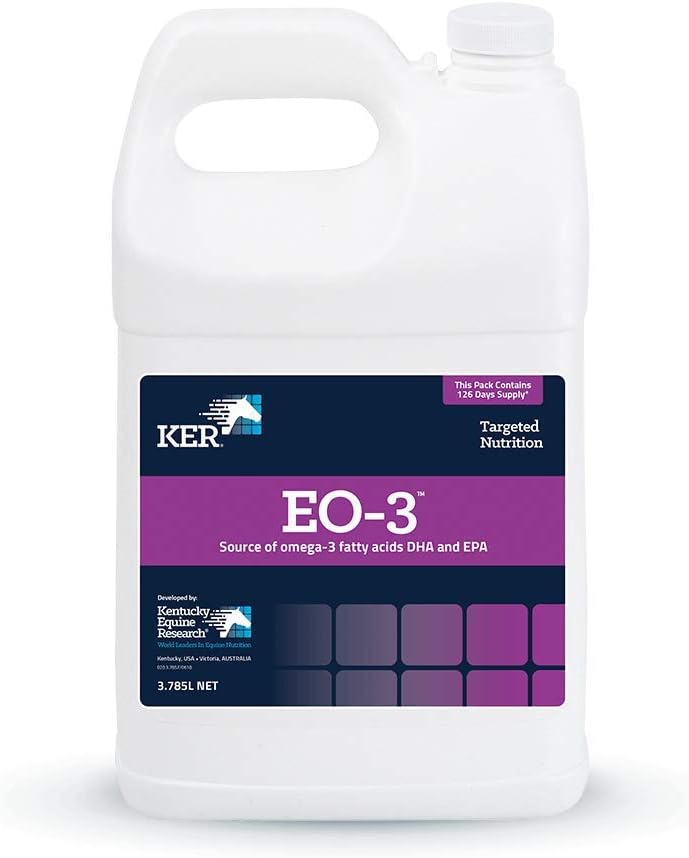


Kentucky Equine Research EO-3: Quelle von Omega-3 Fettsäuren DHA und EPA für Pferde, 1 Gal (128 Portionen)
- Omega-3-Fettsäuren aus Fischöl haben positive Auswirkungen auf Glukosetoleranz, rote Blutzellflexibilität und zahlreiche entzündliche Bedingungen bei Pferden
- Reproduktionsleistungen für Zuchthengste und schwangere und laktierende Bruträume
- Als Vorläufer von lokalen Hormonen werden die langkettigen Fettsäuren DHA und EPA effizienter eingesetzt als pflanzliche Quellen von Omega-3-Fettsäuren.
What Is EO-3™?
EO-3™ is a rich source of the long-chain omega-3 fatty acids DHA and EPA in a palatable liquid form for horses. EO-3™ can be fed to all classes of horses, including foals, breeding stock, and performance horses to improve the critical ratio of omega-3 to omega-6 in the diet.
The equine athlete that is provided EO-3™ can benefit from the difference in inflammatory response. In addition, marine-derived omega-3s have also demonstrated benefits to the cardiovascular system, reproductive performance, and bone development in numerous research studies in several species.
Why Should I Use Marie-Derived Omega-3s for My Horse?
Improves glucose tolerance
Strengthens immune function
Increases red blood cell flexibility for respiratory health and performance
Enhances bone metabolism and development
Benefits of DHA- and EPA-mediated inflammatory response include reduction in joint inflammation, allergic reactivity, exercise-induced bronchoconstriction, and exercise-induced pulmonary hemorrhage
Reproductive benefits include improved fertility, improved colostrum quality, enhanced passive transfer of antibodies to foals, and increased sperm concentration, motility, and viability
Marine-derived long-chain fatty acids DHA and EPA are more efficiently used as precursors of local hormones than plant-based sources of omega-3 fatty acids such as flax or chia
Feeding Directions:
Add 1 to 2 oz (30 to 60 mL) to the feed of growing horses, broodmares, and performance horses in light to moderate work daily. Horses in heavy work, breeding stallions, and those recovering from an illness or injury may be fed 2 to 4 oz (60 to 120 mL) per day. Start with an introductory dose of 1/2 oz (15 mL) or less and gradually increase over a period of 7-10 days.
Wichtige Informationen
Anfahrt
Fügen Sie 1 bis 2 Unzen (30 bis 60 mL) zu den Futtern von wachsenden Pferden, Bruträumen und Leistungspferden in leichtem bis mäßigem Alltag hinzu. Pferde in schweren Arbeiten, Züchtungshengste und solche, die sich von einer Krankheit oder Verletzung erholen, können 2 bis 4 Unzen (60 bis 120 ml) pro Tag gefüttert werden. Beginnen Sie mit einer einleitenden Dosis von 1/2 oz (15 mL) oder weniger und erhöhen Sie allmählich über einen Zeitraum von 7-10 Tagen.
Produkt Abmessungen
7,5 x 4 x 12 Zoll; 4 Unzen
Spezifikationen
| Datum | 2027 |
| Artikel Gewicht | 4 Unzen |
| Artikel Volumen | 1 Gallonen |
| Flammen | Fische |
| Art der Maßnahme | Libyen |
| Produktart | Tierernährungsergänzung |
| Marke | Kentucky Equins Forschung |
| Stichwörter | |
|---|---|
| Stichwörter | |